A cozy, digital-art workshop composed entirely of floating, modular cubes: some cubes show evolving code snippets, others display wireframe interfaces, while a few morph in real time into polished components. The cubes orbit a central, glowing sphere that pulses with soft gradients of orange and teal, symbolizing an AI co-creator. The background is a deep navy with subtle particle trails tracing the cubes’ paths. Gentle, diffused studio lighting with soft highlights on cube edges creates a comfortable, inviting atmosphere rather than a harsh lab feel. Captured from a slightly low, wide-angle perspective, the composition emphasizes the playful, dynamic motion of experimentation. The overall mood is warm, curious, and optimistic, presenting software creation as an open-ended playground instead of a rigid assembly line, aligned with play-first programming ideals.

Play-First Programming

A development philosophy for AI-native teams who prototype by playing before they commit to specs.
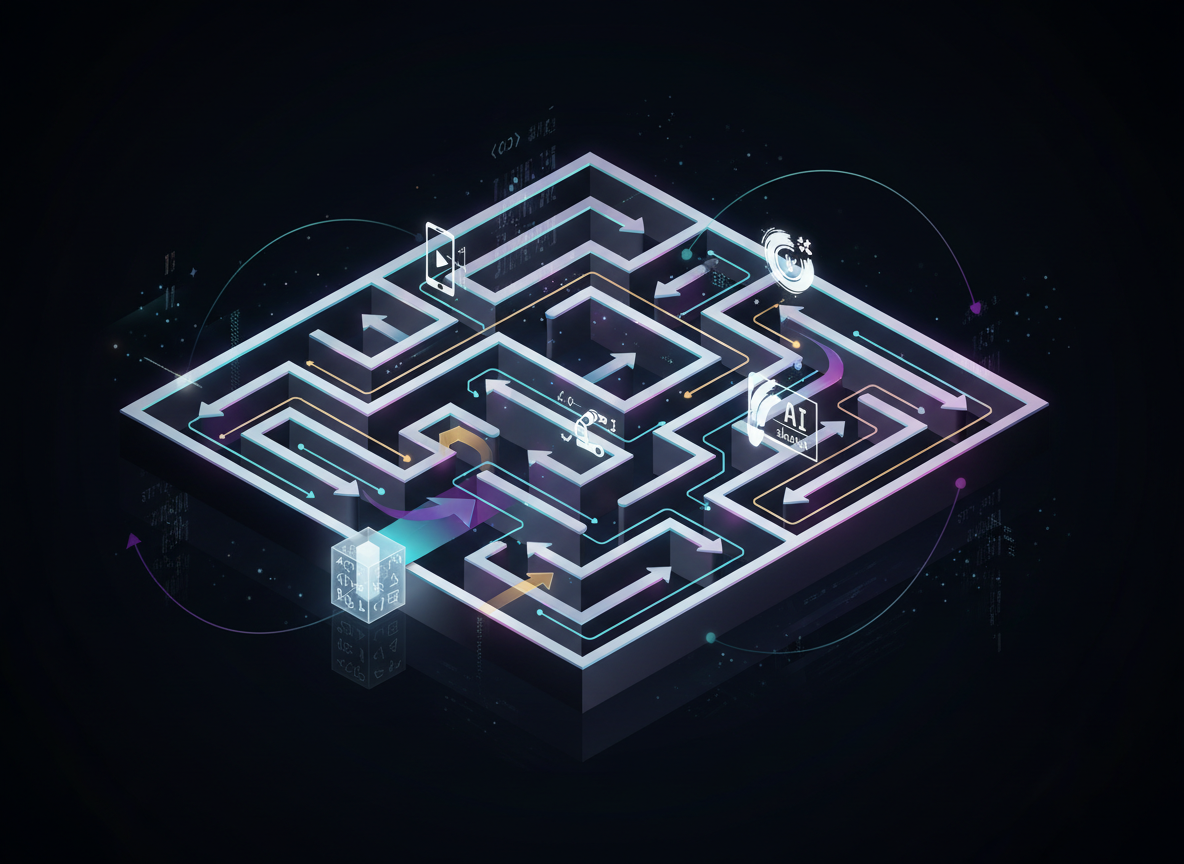
A stylized digital-art illustration of a glowing maze made of interconnected circuit traces and branching flow arrows, floating in a dark, void-like space. At the maze’s entrance lies a small, luminous cube labeled with abstract symbols, and within the pathways are scattered playful icons representing half-formed apps, tiny prototypes, and AI-generated sketches. Soft, directional rim lighting in cyan and magenta outlines the metallic maze walls, while the floor beneath reflects faint, distorted echoes of the structure. The composition uses a dynamic isometric perspective, emphasizing depth and multiple possible paths. Thin beams of light occasionally leap from one route to another, suggesting rapid iteration and pivots. The mood is adventurous and exploratory, with a clean, modern, tech-forward style that visually explains the process of navigating ideas through playful experimentation.

Why Play First

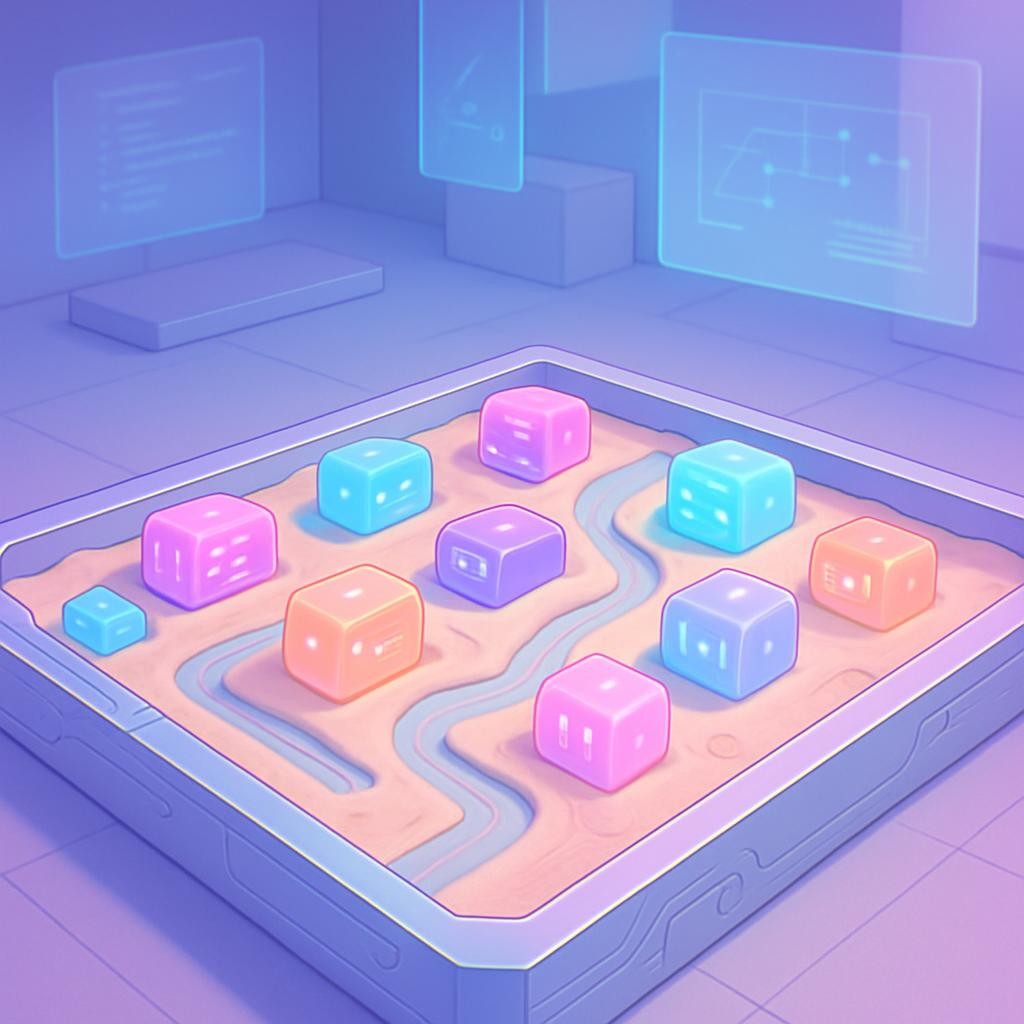
A digital-art scene of a lively, pastel-colored sandbox shaped like a giant circuit board, each sandbox cell filled with glowing, malleable blocks of code that look like jelly. The sandbox sits in the center of a minimalist tech studio, with sleek, semi-transparent screens hovering in the background displaying faint, evolving diagrams. Overhead, diffused ambient lighting mixes soft purples and blues, casting gentle reflections on metallic edges and subtle shadows in the sand’s carved paths. The composition is a slightly elevated three-quarter view, drawing the eye across experimental trails carved through the code-sand. The atmosphere is playful and experimental, suggesting ideas being discovered through tinkering rather than planning. Clean lines, smooth gradients, and a vibrant, futuristic aesthetic reinforce the philosophy of exploration before specification.
A digital-art split-screen landscape where the left side shows a rigid, monochrome grid of locked-in boxes labeled with tiny specification icons, while the right side blossoms into a vibrant, fluid terrain of morphing shapes representing evolving prototypes. In the center, a glowing, translucent bridge of light shaped like a looping scribble connects the two worlds. The environment is an abstract, infinite plane with faint, circuit-like etchings underfoot. Overhead, soft golden hour lighting gradually transitions from cool gray on the left to warm pink and orange on the right, symbolizing the shift from planning to play. Captured from a cinematic, wide-angle perspective with strong leading lines toward the bridge, the mood is transformative and uplifting, with a clean, modern digital-art style that makes the philosophy of exploration before specification immediately legible.

Play-First vs Spec-First, Visually

See how exploration-led workflows differ from spec-first development with simple diagrams and callouts that map loops of play, feedback, and refinement against traditional planning, tickets, and gated releases.

Is this your new site? Log in to activate admin features and dismiss this message
Log In